Rebuilding Futures

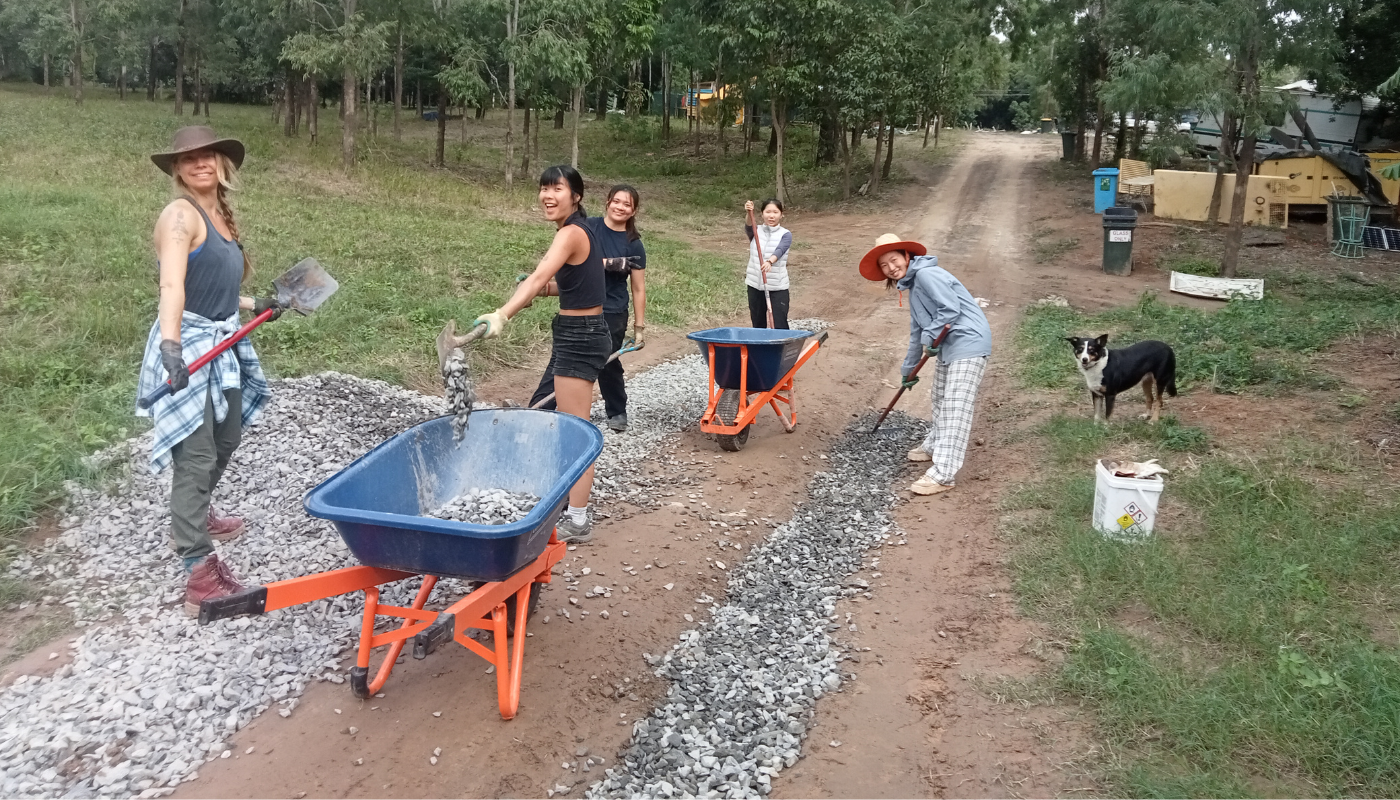
Round 4 recipient: Cape York Folk Club Incorporated, Rossville, QLD

The Rebuilding Futures grant program seeks to support communities to strengthen their resilience to significant disasters by undertaking a wide range of medium to long-term community-led disaster recovery, prevention and preparedness projects for community benefit.

Round 6 is now open, offering grants of up to $25,000 for: 

Stream 1 Disaster Resilient Communities – Communities impacted by disaster from 2019-2025

Stream 2 Disaster Recovery Support 2025 – QLD Communities impacted by Tropical Cyclone Alfred or Western Queensland Flooding

NOTE: Organisations may submit their application into ONLY ONE of these streams.

Proudly supported by

Suncorp logo

Round 6 of Rebuilding Futures is now open.

Applications close 16 April for funding awarded in late June.

READ the Program Guidelines

Apply Now

How to apply

Please read the information on each of the three tabs below to make sure this is the right grant for your project.

If you want to explore other grant options, please go to Find Funding Now.

I have a question, who can I talk to?

Jane Crane, Grants Officer
or
Danielle Griffin, Program Manager

Ph: 1800 170 020 or Email: granting@ninjatest-frrr.madeneat.dev

Confirm you are eligible to apply for this grant

To make sure this is the right grant for your community, please read the grant information detailed in the Program Guidelines below carefully. Click on each headline to reveal the detail. If you need to share this information with others, you can download the guidelines below.

Download the Program Guidelines

The Rebuilding Futures program seeks to support communities to strengthen their resilience through long-term recovery from a significant disaster by undertaking community-identified and community-led recovery, prevention and preparedness activities for public benefit.

This grant round reflects a strengthened focus on supporting communities to be prepared and resilient as extreme weather disaster events increase in frequency. The round is open to remote, rural and regional communities across Australia who want to deliver projects that will support efforts to mitigate the risks of disaster via adaptation of both physical infrastructure and social connectedness and capacity.

Applications are open to all remote, rural and regional communities who have been impacted by disasters or extreme weather events with a government disaster declaration between January 2019 through to December 2025.

Stream 1 Grants are open to applications from any remote, rural or regional community that has been impacted with a government disaster declaration (include the link) between January 2019 through to December 2025.

Stream 2 Grants are open to applications from QLD communities in these Local Government Areas which were impacted by either Tropical Cyclone Alfred or Western Queensland Flooding in 2025.

In Round 6, two grant Streams are offering funding of up to $25,000. You may apply for funding in one Stream only:

Stream 1 – Disaster Resilient Communities 2019-2025:

OR

Stream 2 – Disaster Recovery Support for QLD Communities:

Each Stream offers grants up to $25,000 for projects or initiatives that support medium to long-term recovery and resilience building of the local community.

A broad range of charitable activities are considered under this program, including:

  • Delivering, or providing projects, events, programs, initiatives and services;
  • Purchasing or hiring equipment and materials;
  • Community infrastructure;
  • Organisational or network capacity building;
  • Community resource development; and
  • Proportionate costs associated with staffing as required to deliver the activity.

Rebuilding Futures grants in Stream 1 & Stream 2 aim to support projects that:

  • Assist communities to prevent and prepare for, respond to, or recover from disasters and climate-related disruptions;
  • Demonstrate broad community benefit, are locally determined, support collaboration and build capacity for the future;
  • Build networks or resources so that local communities can share information, increase climate related knowledge, and strengthen social connection;
  • Aim to ‘build back better’ infrastructure following a disaster event or climate-related disruption, accounting for historical and future climate risks;
  • Increase the overall wellbeing and mental health of communities;
  • Recognise First Nations knowledge and strengthen cultural practices to foster healing, connection and care for Country;
  • Infrastructure preparedness approaches that use resilient materials and harness clever use of design to reduce future impacts of disasters and climate-related disruptions; and
  • Have limited ability to attract funds from other donors or government.

Community-led initiatives will be supported that can achieve at least one of the following:

  1. Assist recovery from the impact of disaster and climate-related disruptions;
  2. Strengthen disaster prevention and preparedness for the future;
  3. Evidence outcomes of one or more of the 7 critical dimensions for building community resilience: Inclusion; Networks; Communication; Information; Self Organising Systems, Local Decision Making; and/or Resources.

All projects should demonstrate:

  • Experience of a disaster impact or climate-related disruption that informs project design and delivery;
  • Projects suit local community needs, priorities and interests being locally determined, supporting collaboration and building capacity for the future.

Where relevant, FRRR also wants to support projects that:

  • Invest in outback, remote and less-resourced communities where they may be more highly impacted by disasters;
  • Support First Nations-led initiatives that strengthen culture, Country, economic participation and reconciliation;
  • Support communities to implement generational transition; and
  • Build capacity and resourcing for a just and equitable energy transition.

Applicants are welcome to discuss their application with FRRR staff by free calling 1800 170 020, or emailing granting@ninjatest-frrr.madeneat.dev.

There are several areas that we can’t fund through this program. If in doubt, please contact us.

  • Projects that are subject to an insurance claim;
  • Projects that support core areas of responsibility of Federal, State, or Local Governments;
  • Ongoing costs such as rent and utilities (unless it directly relates to the project);
  • Projects that should be covered by your current insurance policy;
  • The encouragement or advancement of sport, recreation, and social activities are not considered charitable under Australian law. Applications from sporting organisations need to clearly demonstrate charitable outcomes and benefit to the wider community that are above and beyond the sporting activities of the club;
  • Overseas travel and overseas projects;
  • Prizes, gifts, trophies, or awards;
  • Political lobbying;
  • Projects that primarily benefit private business, a sole trader, or private interests;
  • Applications submitted by or for evangelist groups;
  • Projects solely focused on animal welfare;
  • Initiatives relating to pandemic recover, mice plagues, other environmental disease, economic disruptions, or other events causing significant community impacts.

To apply, you must meet the following criteria:

  • Applicant organisations must be a not-for-profit organisation with either an Incorporation Certificate and/or an ABN. If you are unsure if your organisation is a registered not-for-profit (for example, if you are a Co-operative, Other Unincorporated Entity, Public Company, or Trust), please contact FRRR.
  • Projects must be for charitable purposes and offer clear public benefit;
  • Not-for-profit organisations with or without DGR-1 endorsement are eligible;
  • Organisations can submit one application per grant round;
  • Projects must benefit remote, rural, or regional Australia; and
  • Projects must take place in an eligible remote, rural or regional Australian community with a disaster declaration from January 2019-December 2025. FRRR will refer to the government disaster declaration information to inform eligibility, but it will not be the only basis on which an application is assessed and prioritised. If you believe that you are in a remote, rural or regional community disaster-affected between 2019-2025 and your region is not listed, please call us on 1800 170 020 to discuss the situation.

Please note, you will be considered ineligible if the:

  • Application is submitted by individuals, sole traders, private, or commercial businesses (as per the submitted ABN);
  • Application is submitted by an organisation that is a non-legal entity and the nominated legal governing / partnering organisation has not provided written confirmation of their willingness to assume responsibility for management of the funds and acquittal of the project;
  • Application is submitted without required organisational financial information and quotes or rationale for budget items over $1,000;
  • Overdue Final Report/s from any FRRR grants awarded in the previous seven years have not been acquitted (delivery organisations should check with the legal organisation to see if there are any outstanding final reports);
  • Application is for a project or activity that has already occurred / is occurring prior to the announcement of funding;
  • Application is incomplete. NOTE: Due to the volume of applications received, applications are assessed based on the documentation received at the time of submission. FRRR is unlikely to follow up on missing documentation after applications have been submitted.
Gather information to support your grant application

Please read the information below to support the planning and preparation of your project. It also sets out what you MUST include for your project to be considered. There are plenty of helpful resources to support you along the way.

Please contact FRRR if you have any questions about the following information.

Your grant application MUST include:

Every application needs to include an organisation that holds either an ABN or Incorporation Certificate. If your organisation doesn’t have that, FRRR may still fund the project but you need another organisation’s support, which we refer to as the ‘legal organisation’ (with your organisation being the delivery organisation). This situation often occurs when the organisation delivering the activity or project is a branch of an overarching organisation – such as a local CWA or YMCA branch. In this case, the CWA or YMCA would be the legal organisation.

Even though your organisation may complete the application (and will be doing the work), it’s the ‘legal organisation’s’ legal and financial information that needs to be provided. They also need to provide a letter of support, confirming they are willing to play this role, with a template available here for your convenience.

FRRR conducts a broad range of due diligence queries when reviewing applications, such as: reviewing current and past incorporation, DGR and ACNC status. If your organisation has happened to have their incorporation status, DGR status or ACNC status changed or ACNC registration revoked or voluntarily withdrawn, please let us know the reasons for this.

Applications from ACNC and/or unincorporated associations are required to submit their organisation’s Constitution.

Why is this important?

This program is only able to distribute funds to not-for-profit organisations with an ABN or Incorporation Certificate, and FRRR needs to know that the organisation with that ABN / Incorporation number understands and agrees to carry out their responsibilities in relation to your project, if successful.
Applications received without the requested financial information are ineligible. You must include the organisation’s:

  • Annual income (total income in the most recent financial year);
  • Annual expenditure (total expenses in the most recent financial year);
  • Current assets (from your audited financials, or bank balance minus any debts).

Please note:

  • Provide a brief explanation of any large financial surplus or current assets and reasons why FRRR funds are still required;
  • Please explain any deficits and steps to sustain the organisation financially.

Please contact us if you cannot provide required financials or you are unsure about what to provide.

Why is this important?

FRRR uses this information to understand your organisation’s financial viability and ability to manage grant funds.

You must include a project budget that clearly shows the items that FRRR grant funds would be used for and that also shows all income and expenses related to your project.

Budgets should be realistic and must add up – i.e. total expenditure must match total income.

Applicant contributions in cash or in-kind are highly regarded. Quotes or detailed rationale for items over $1,000 are required, where possible. Note: FRRR suggests costing unskilled volunteer labour at $45 per hour.

For more info on costing volunteer labour, visit:
https://explore.fundingcentre.com.au/help-sheets/valuing-volunteer-labour.

Why is this important?

A clear budget helps FRRR to understand the size of your project, exactly how FRRR funds will be spent and helps demonstrate community support for your project through in-kind contributions either from your organisation or partners / community members.

Helpful resources:

FRRR strongly recommends that you provide supporting materials such as letters of supportevidence of permission from the property owner, community plans, survey results, photographs, media clips and research reports that can show broad community support and partnerships involved in the project. For more information on supporting documentation, watch this recording.

Applicants are required to provide a high-resolution photo (between 1MB and 10MB). The photo can be a group shot of staff or volunteers in your Community Organisation OR an action shot relevant to the project you are applying for that includes people. If you are successful, FRRR may utilise this photo in grant announcements and/or associated communications.

Large documents should be referenced and explained in the application.

Why is this important?

FRRR seeks to fund projects that are well-supported by the broader local community, are locally-led and delivered, show good partnerships and benefit multiple parts of the community. As FRRR is not always familiar with your community, our staff consider support material as evidence toward understanding the level of community need, benefit and support.

Helpful resources:

A clear description of exactly what the grant funds will be used for, when and where the project will happen, who will benefit and who will be involved in delivering the project, why the project and grant funds are needed, how funds will be spent and how the activities and success of the project will be recorded, evaluated and shared.

Where possible, we encourage you to make it really clear that your organisation is ready and able to deliver the project and, if required, provide ongoing support for the initiative.

Why is this important?

FRRR needs to clearly understand your project to assess its merits. Applicants should focus on addressing the what, when, where, who, why and how of the project, as this is the best way to clearly communicate the details of the project.

A ready community is best placed to achieve the aims of your project, so during assessment, our staff look for information that tells us that good leadership, skills and awareness exist in your community to support the project now and in the future.

Helpful resources:

We have grouped the kinds of projects communities commonly ask us to help fund into seven areas, which we call the Activity Tree:

1. Building community resilience
2. Developing organisational resilience and capacity
3. Enhancing environmental sustainability
4. Fostering cultural vibrancy
5. Lifelong learning and education
6. Economic strength
7. Improving community health and social wellbeing

We ask you to nominate one of those seven areas when you apply. So, before you lodge your application, download the Activity Tree to help you identify your focus area.

Why is this important?

FRRR makes grants to communities, but we also need to be able to demonstrate to our funding partners where communities need support.

Important notes for successful grantees:

To receive the grant funds, successful grantees (the legal entity) must have a bank account registered under the organisation’s name. Without a bank account, the grant funds cannot be disbursed, and the grantee will not receive the funds.

When the project is complete, the grantees will be required to provide a Project Report on the project’s activities, impacts and outcomes, and include a financial acquittal of your grant. Project reporting is an opportunity for the organisation to reflect on and celebrate what has been achieved and to share learnings.

Grantees have up to 12 months for Small & Vital projects (grants up to $10,000) and 18 months for Larger Leverage projects (grants up to $50,000) to deliver the project. The online Project Report is due 8 weeks after project completion.

Organisations with an overdue Project Report are NOT ELIGIBLE to apply for further FRRR funding until the report is received. If the Project Report is not received, the applicant organisation may be suspended from applying for any FRRR grant programs until it is supplied.

Need some more help?

We have a large selection of resources on our Grantseeker Resources Page to help you along the way.

FRRR has moved to a new online granting system called Blackbaud Grants Portal. All applications must be submitted via this system.

Round 6 of the Rebuilding Futures program is now open. Applications close 16 April 2026 at 5pm VIC time (AEST). Funding will be awarded in late June 2026.

Please contact FRRR if you have questions about any aspect of the Blackbaud Grants Portal online application system.

To access any active grants you have with FRRR, click on the Login button at the top right of this page.

Helpful resources:

It is time to submit your application. If it is helpful, you can download a sample copy of the sample application forms for each Stream:

Before you submit your application via the online Grants Gateway, please ensure you have:

  • Confirmed you are eligible to apply for this grant
  • Provided clear information about your project
  • Checked that you are an eligible legal entity
  • Provided the financial information required
  • Created a budget for the project
  • Gathered supporting materials
  • Spoken to an FRRR contact person where you were unsure of any requirement
  • Gathered community support for the project
  • Checked the information you are providing to make sure it is clear and relevant to the project
Rebuilding Futures Program: Definitions 

Please read the additional information below to help you understand key terminology used in this program.

If you have any further questions, please contact Danielle Griffin, Program Manager, or Jane Crane, Grants Officer by emailing granting@ninjatest-frrr.madeneat.dev or free call 1800 170 020.

  • Disaster: A serious disruption of the functioning of a community or a society at any scale due to hazardous events interacting with conditions of exposure, vulnerability and capacity, leading to one or more of the following: human, material, economic and environmental losses, and impacts. This can include climate related conditions, such as drought, heatwaves and bushfire; earthquake; flood; storm; cyclone; storm surge; landslide; tsunami; meteorite strike; or tornado.
  • Disaster Prevention: Activities and measures taken to avoid or reduce existing and new disaster risks and climate-related impacts.
  • Disaster Preparedness: Knowledge and activities undertaken in advance that help individuals, communities or organisations get ready and make plans to cope with the effects of a disaster.
  • Disaster Recovery: Both a process and an outcome. As a process, recovery is coming to terms with the impacts of a disaster and managing the disruptions and changes caused, which can result in a new way of living. As an outcome, recovery is restoring or improving a disaster-affected community to make it stronger should a disaster occur again.
  • Disaster Resilience: The ability of a system, community or facilities impacted by disaster to resist, absorb, accommodate or adapt to, transform and recover from the effects in a timely and efficient manner, including through the preservation and restoration of its essential basic structures and functions through risk management.
  • Disaster Risk: The potential loss of life, injury, or destroyed or damaged assets which could occur to a system, society or a community as a function of hazard, exposure, vulnerability and capacity.

When we got the FRRR grant, it took so much pressure off us as a charity – we hadn’t been able to run a fundraising event in nine months, and we couldn’t see a way out of COVID-19. The grant allowed us to continue our plan for our projects and support our flood and fire-affected community.”

Erin Denham, Make a Difference Port Macquarie

Inspiration - Past Projects

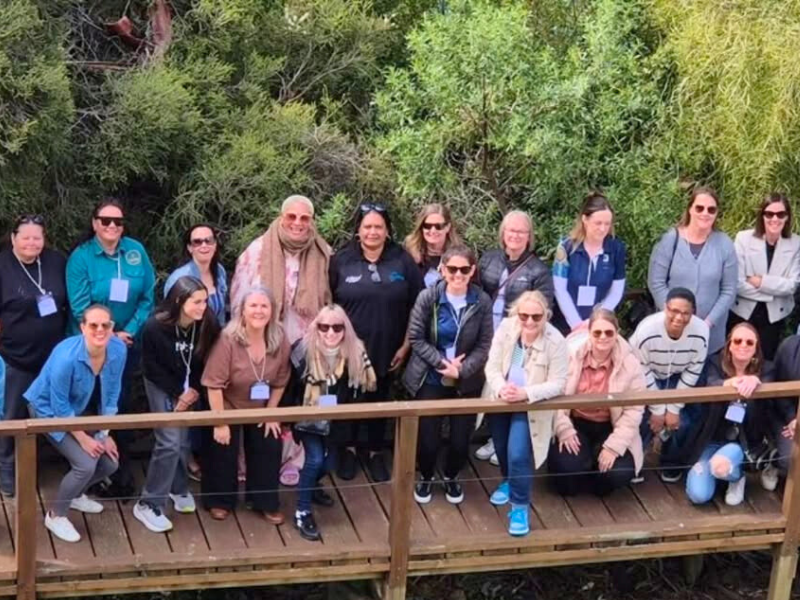
Group of people posing on a walking bridge.

Empowering First Nations women in cultural tourism

First Nations Women in Tourism Australia used an $8,900 grant from FRRR's SRC program to run a one-day cultural tourism event in Port Lincoln, SA.
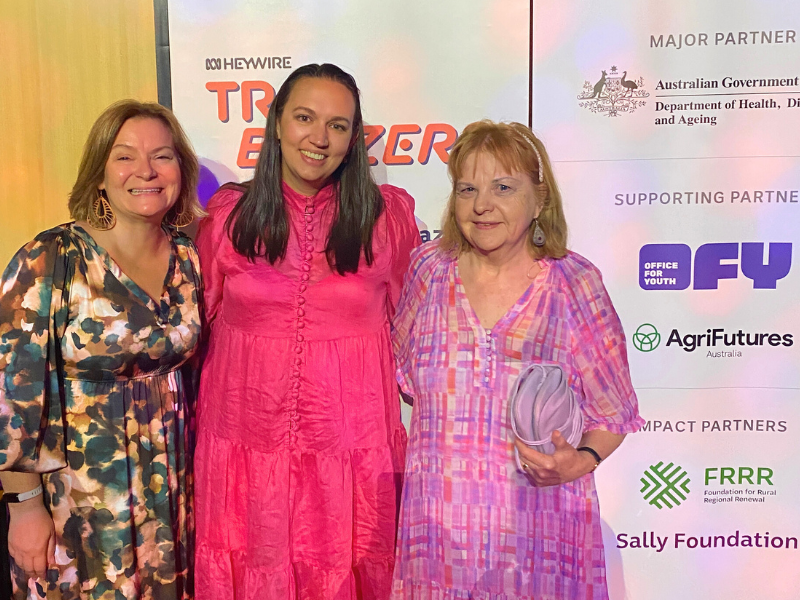
Three women standing together in front of a media board.

A conversation with Geraldine Roche from the Sally Foundation about philanthropy, partnership and empowering the next generation

A conversation with Geraldine Roche from the Sally Foundation about philanthropy, partnership and empowering the next generation via FRRR.

Meet Deb Samuels

In December 2026, Deb Samuels was appointed Head of Partnerships at FRRR. Enjoy this insightful interview and learn what drew her to this role.
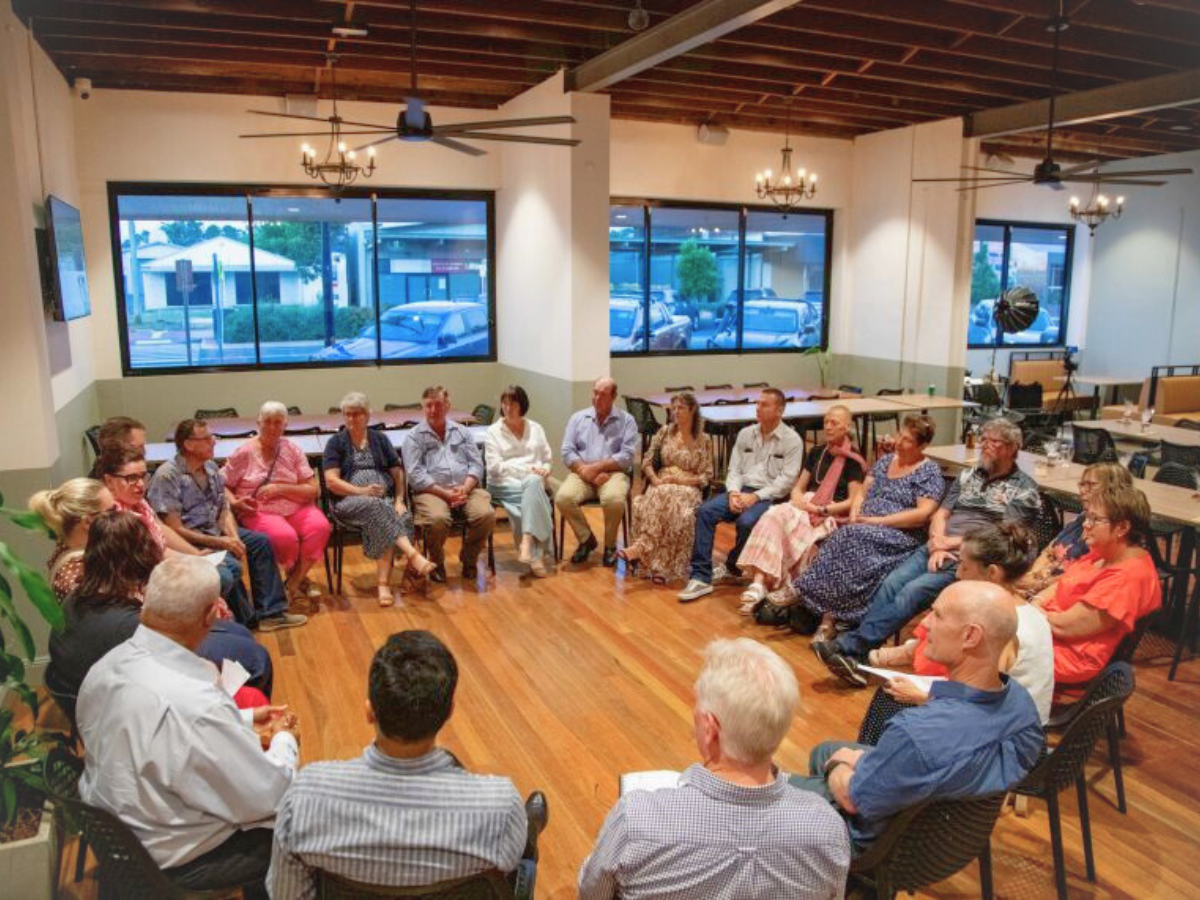
Community representatives sitting in a circle at the celebration dinner.
Community representatives came together for a celebration dinner.

DR:FR program coming to a close in the Burnett Inland, but legacy is strong 

Thanks to the DR:FR program, the Burnett Inland region is better equipped to respond to the changing climate and the increased prevalence of disasters.
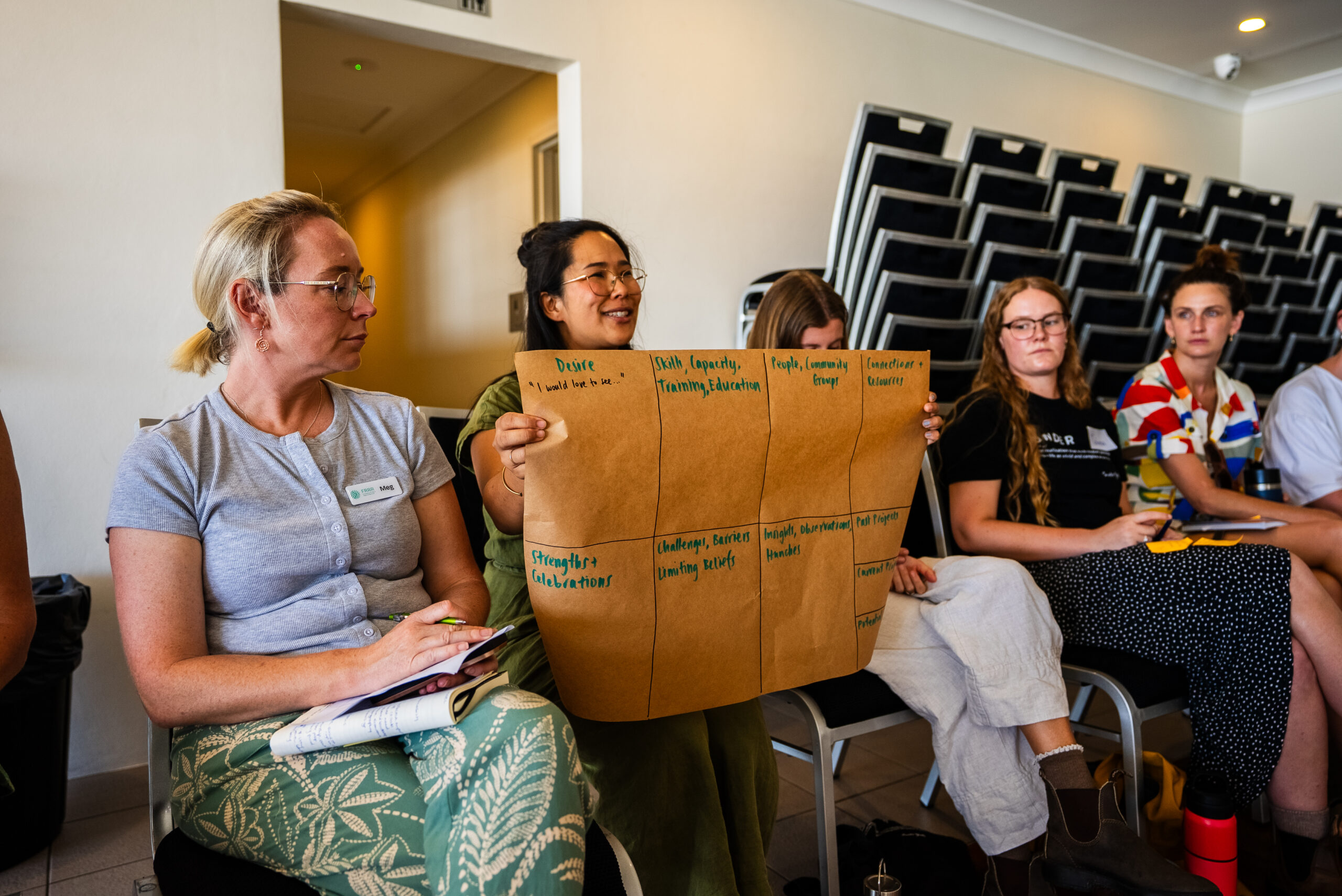
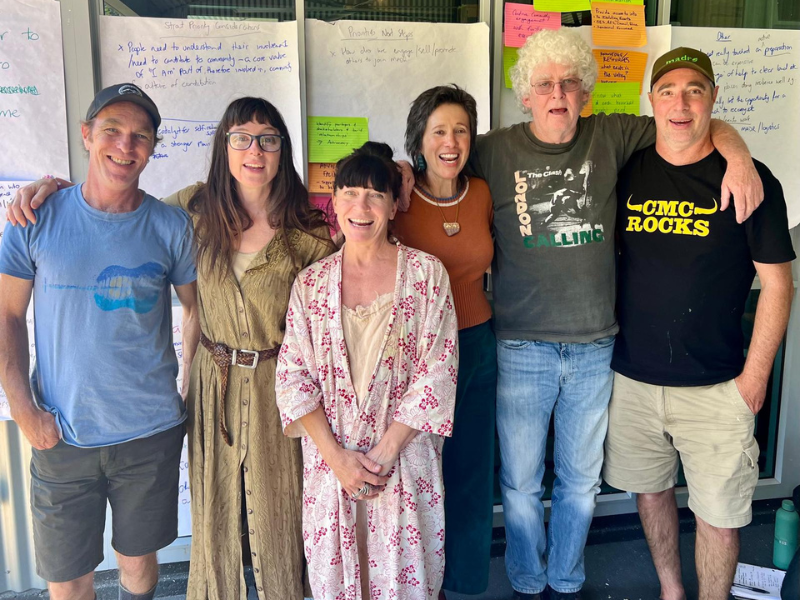
Women participating in workshop holding planning poster
Collaborative planning in action during a community workshop. Participants share ideas while reviewing a large brainstorming poster.

South Coast Futures already creating new connections

FRRR held a leadership workshop for the South Coast Futures program to explore how local leaders can lean into their collective capacity in and with community.
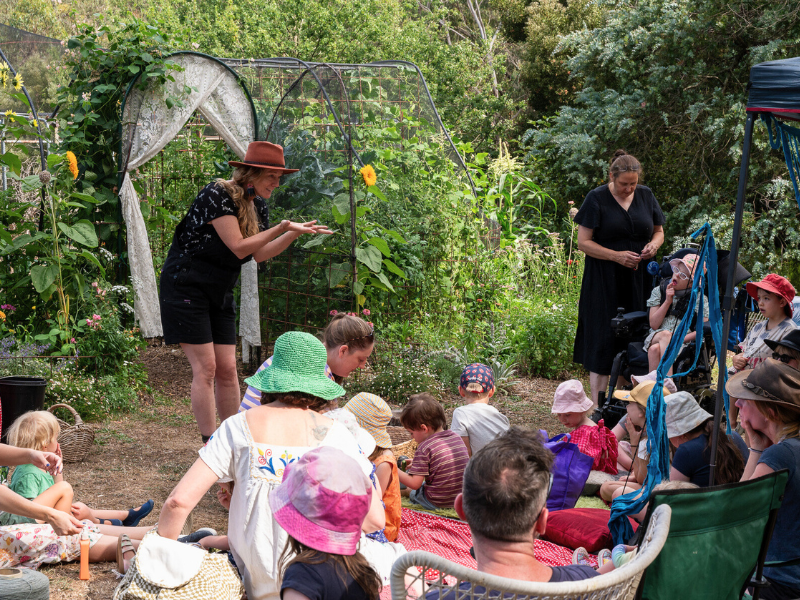
Group of people with lots of kids sitting on the ground and a garden in the background of the photo.

FRRR backs rural Australia with more than $760,000 in grants

FRRR has awarded $763,234 in funding to 65 locally-led initiatives that will empower remote, very remote, rural and regional communities to be more vibrant, resilient and sustainable places to live, work, learn and invest.
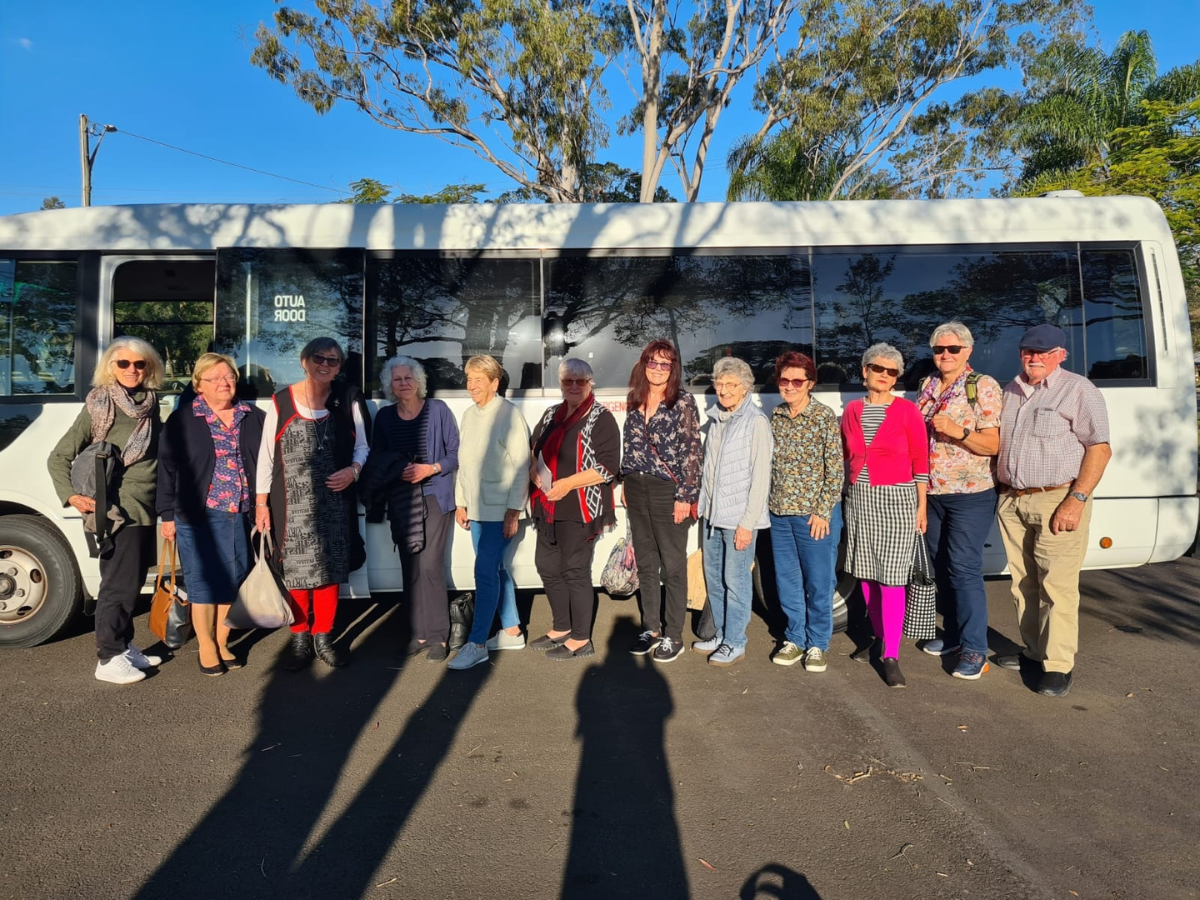
Group of people standing together with their arms around each other's shoulders.

Grants available to support disaster recovery and preparedness projects

Applications are open for FRRR's Rebuilding Futures program for recovery & preparedness projects in communities impacted by disasters between Jan 2019-Dec 2025.

Beyond bricks and mortar

The Friends of Lismore Regional Gallery shifted their focus from supporting a building to supporting community recovery with a Rebuilding Futures grant.

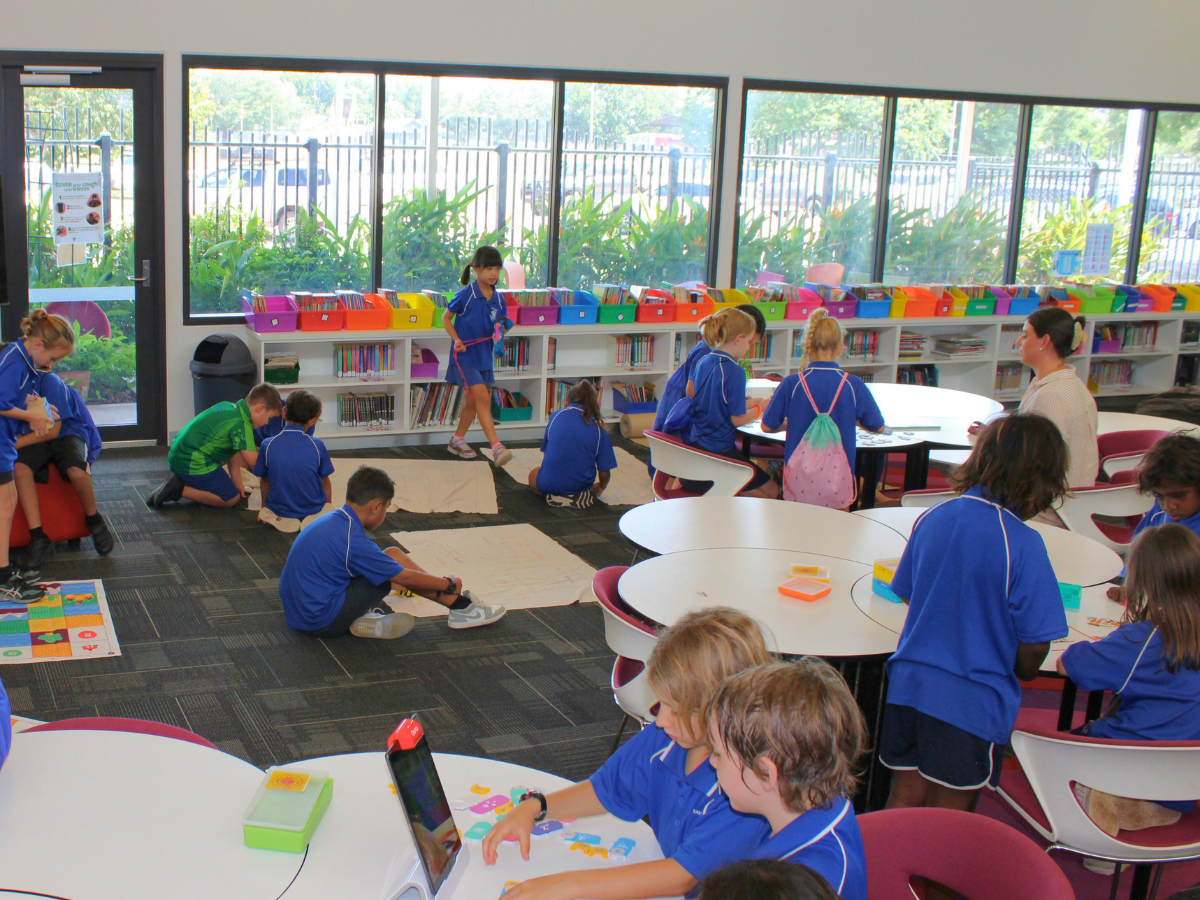
Tech skills for students in the East Kimberley

Children in some of the East Kimberley’s most remote communities are gaining vital digital skills thanks to a $10,000 Telstra's Connected Communities grant.

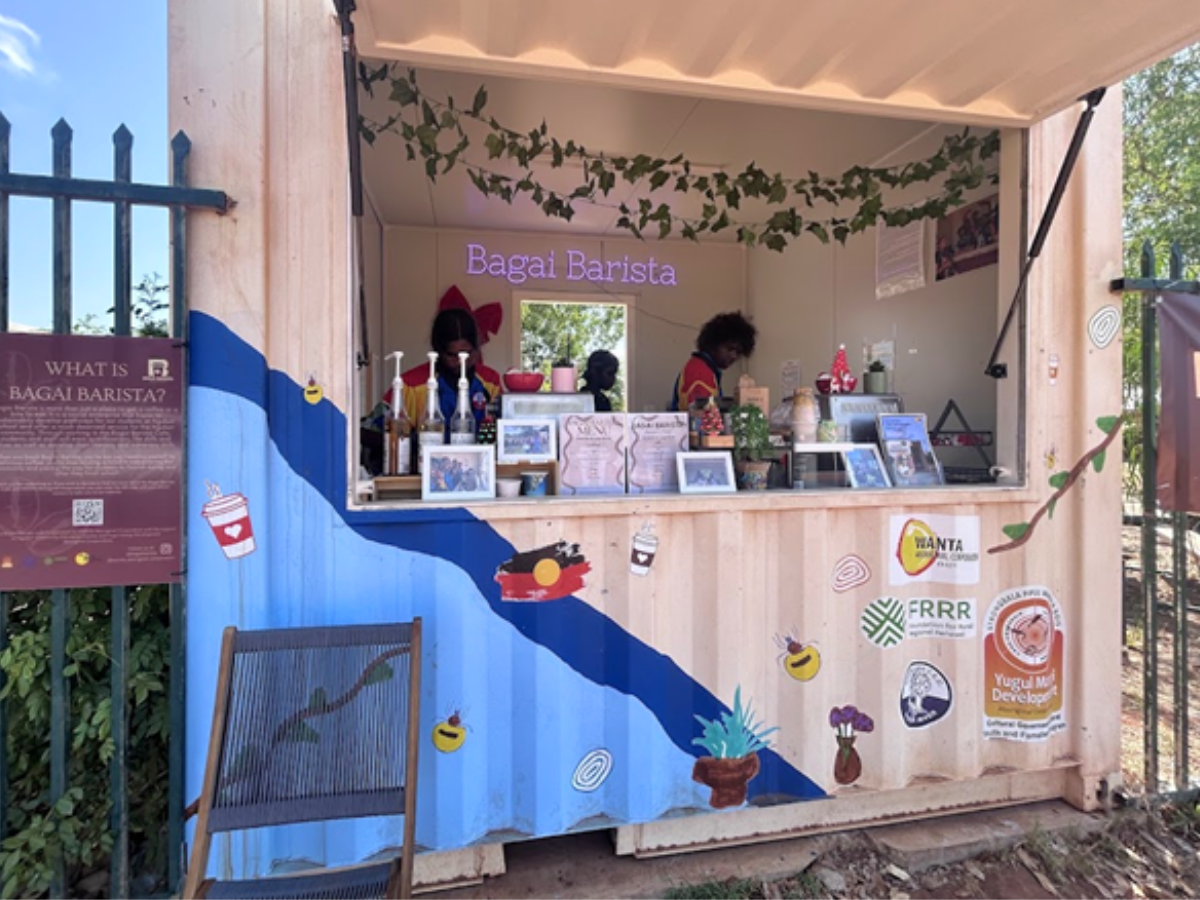
Small cafe, strong community

The youth-led café Bagai Barista has grown from a small school-based initiative into a vibrant community hub thanks to a $47,075 SRC grant.
X

This field is for validation purposes and should be left unchanged.

Thank you for your interest in creating a lasting legacy. If you have included FRRR in your will or if you want more information about what it involves, please complete the form below. We'll then send you an email with a link to download our Gifts in Wills brochure.

Gift in Will(Required)