Introduction by Deb Samuels, FRRR’s Head of Partnerships
One of the true joys of stepping into the Head of Partnerships role has been the opportunity to deepen my relationships with the generous, values‑driven philanthropists who make FRRR’s work possible. These partnerships are not simply financial, they are grounded in trust, shared purpose, and a commitment to walking alongside remote, rural and regional communities and the next generation of leaders as they shape their futures.
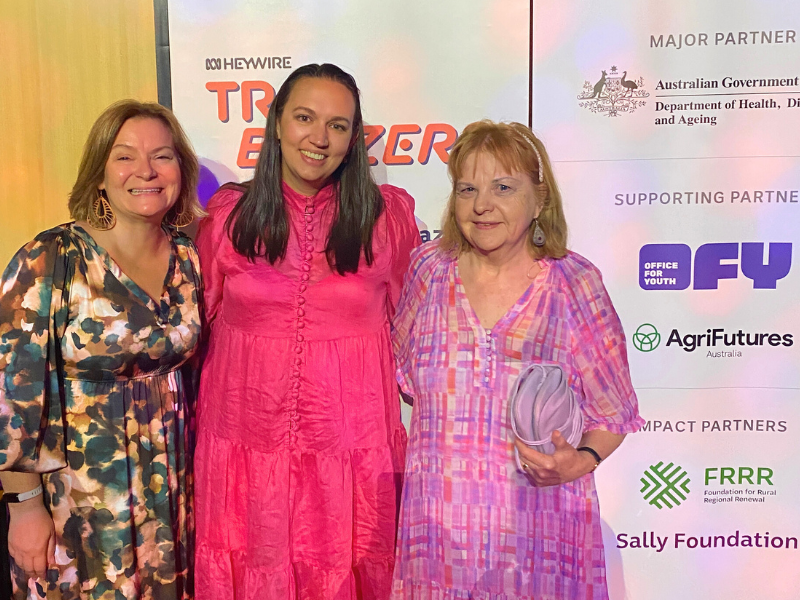
That’s why I was especially grateful for the chance to sit down with Geraldine Roche from the Sally Foundation for this interview. Geraldine is not only one of my favourite philanthropists; she is also one of the most hands‑on, thoughtful, and deeply engaged partners I’ve ever worked with. Our partnership with the Sally Foundation is truly unique, built on listening, learning together, and a shared belief in the power of young people.
I know you will find Geraldine’s insights as inspiring as I do.
How did the Sally Foundation begin, and what guides your giving?
The Sally Foundation was established in 2013, when Geraldine and her husband Mike began planning for life after full‑time work. Without children of their own, they wanted to create something that would carry forward their values in the spirit of Geraldine’s grandmother, the Sally Foundation’s namesake.
Her grandmother came to Australia from England and rebuilt her life in rural Queensland under difficult circumstances, all while helping others with quiet generosity. “She never said it in words,” Geraldine reflects, “but everything she did was about helping people be the best version of themselves.”
Today, that ethos shapes every Sally Foundation program: empowerment, lived experience, and belief in young people’s potential.
Why partner with FRRR and what makes this relationship work so well?
Geraldine first connected with FRRR more than a decade ago after an introduction from Australian Philanthropic Services. A visit to Bendigo and early conversations with the FRRR team cemented her sense that this partnership was different.
What she values most is the people element – trust, honesty, shared learning, and complementary strengths.
- Geraldine shared:“Philanthropy for me is 50% the money and 50% your skills.”
- “FRRR supports with the technical expertise and community connections, but it’s the relationship that makes it powerful.”
- “I feel secure knowing I can ask for advice, and we work things out together.”
She also shared how much she appreciates that FRRR makes the space for her to engage in meaning, hands on ways while also giving communities and young people the agency to lead.
Why invest in rural young people? What motivates your commitment?
The headline here from Geraldine was: “Because young people deserve to be heard and because listening creates change.”
She recalls early days at the annual Heywire Summit where youth voices were not as included in discussions as they are now. Over the years, she has championed environments where young people’s perspectives shape decisions, not just fill a room.
“The key word for me is empowerment,” Geraldine shared. “Listening is incredibly important. Young people have wisdom, ideas, and lived experiences that deserve respect.”
That commitment shows up in everything Geraldine does, from mentoring Trailblazers, to encouraging intergenerational dialogue, to helping young people see themselves not only as future changemakers but as potential social entrepreneurs and philanthropists today.
What have been some highlights of your work with FRRR?
Geraldine’s eyes light up when she talks about the Trailblazers initiative. She values the growth she sees each year in young social entrepreneurs, and especially the moments where young people evolve from tentative speakers to confident advocates.
She also loves the tangible impact of community‑based projects, like the long-running work in Orange, Canowindra and Albury, backed by the Sally Foundation. These projects bring schools, farmers, young people and local businesses together to problem-solve and learn from one another.
Another standout is the evolution of youth‑led grant panels, which she encouraged years before they became standard practice. Seeing these ideas take shape and watching RRR young people rise to the responsibility has been deeply rewarding.
How do we get young people more involved in philanthropy?
Geraldine has a long-held belief: young people learn philanthropy by doing it. Giving them the opportunity to make real decisions, take responsibility, and apply their lived experience is exactly what she sees as foundational for building the next generation of community leaders and funders.
She also sees this as essential to Australia’s broader ambition to grow giving: “It won’t happen overnight. But if young people learn now what philanthropy can be, they’ll carry that through their whole lives.”
What makes a meaningful philanthropic partnership?
Geraldine emphasised three things:
1. Shared values and complementary skills: “You can’t do everything. But when you find people who balance your strengths, it works.”
2. Honesty and trust: Geraldine really appreciates the kind of relationship where issues are surfaced early, feedback flows both ways, and challenges are addressed collaboratively.
3. Deep human connection: “You need to have the people skills. If you can’t connect, the partnership won’t work.”
This is the foundation of what makes the Sally Foundation / FRRR partnership feel so different.
What advice would you give to others considering philanthropy in rural Australia?
- Listen deeply, especially to those with lived experience.
- Work in areas where you feel comfortable and connected.
- Find the right partners to share ideas and learnings.
- Being prepared to learn from communities, not prescribe solutions.
Geraldine also stressed the importance of the quiet kind of courage that allows you to say, “I don’t fully understand, but I want to,” and to act on what comes out of those conversations.
What is your greatest hope for Australia’s young people?
Geraldine’s answer is simple and profound: “That they feel empowered. That they know they have a voice, and that they know people are listening. And that, as they grow, they become mentors for the next generation.”
Geraldine dreams of a future where young people are not only heard, but also seen as equal partners in shaping their communities.